|
|
|||||||||
| J A M E S H A R P U R M | |||||||||
|
|
|||||||||
| Books: click on each cover below to go to reviews and ordering details | |||||||||

|
|||||||||
 |
|||||||||
|
|
|||||||||
|
|
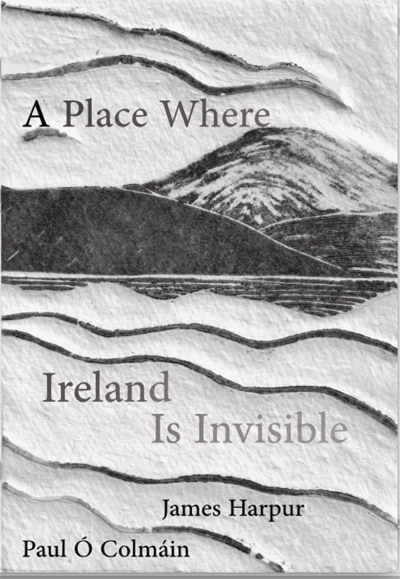
A Place Where Ireland Is Invisible
'In A Place Where Ireland Is Invisible James Harpur has produced 'a rich and fresh harvest, allowing the wonder-tales of Irish saints such as Brendan and Gobnait to shine in their own depth and simplicity. Paul Ó Colmáin's varied and fluent wood engravings are marvellously complementary, adding fresh and sometimes surprising perspectives on the narrative. This is a beautiful book.' Paddy Bushe
A Place Where Ireland Is Invisible is a collector's item: a limited hardback 40-page edition of 400 copies, each signed by the author and artist. The book comes with a cover slip and its pages are sewn in signatures, using the finest quality paper. 'Ó Colmáin and Harpur explore together both the myth and the physicality of the saintly journeys, creating an anthology of spiritual locations - locations that are the result of some abrupt insight or rupturing vision... For Harpur this collection is but another pilgrim's rest on a very long spiritual pilgrimage, recorded so brilliantly already... He is a master-poet, a consummate artist, and serious readers of his poetry will be thrilled by this latest book from West Cork's Eblana Press.' Thomas McCarthy, Studies
|
||||||||
|
|
|||||||||
|
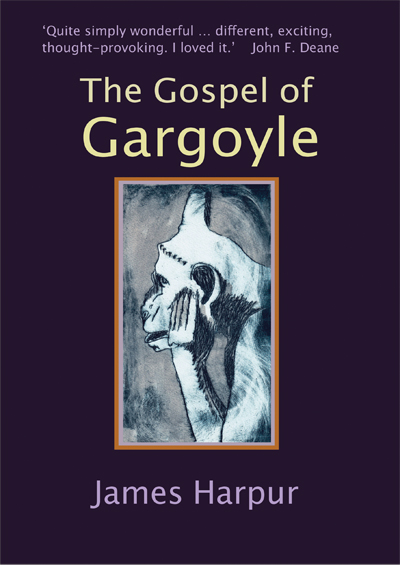
The Gospel of Gargoyle
'A poet residing at the Irish College in Paris has a series of dreams in which he flies to the rooftop of Notre-Dame cathedral and encounters a gargoyle. But not any old gargoyle: this one can speak, and he claims to be a lost spirit seeking salvation through a series of incarnations. Gargoyle and Poet become unlikely companions, bound by a pact: in return for the poet's visits and conversations on the great questions of life (conversations he hopes will free him from his stone incarceration), Gargoyle promises to reveal the answer to the question obsessing Poet: who or what caused the great fire of Notre-Dame in 2019.'
'Quite simply wonderful... different, exciting, thought-provoking. I loved it.' John F. Deane, author of Jonah and Me
'A monumental intellectual undertaking.' The Examiner
'[The book] makes you hold your breath... Huge in vision, it is a very special original, ambitious work of epic proportion, worthy of its great antecedents Dante's Paradiso and Milton's Paradise Lost. To read it is to have a unique experience on different levels - of visionary poetry where the focus is on the elimination of the self, on trying to understand our very existence and our attempts to 'make the infinite finite', of lyrical poetry startling in its imagery and of carefully crafted narrative poetry.' Patricia McCarthy, The High Window
'The freshness of this collection highlights Harpur's exceptional ability to capture metaphysical and existential complexities through a magisterial fashioning of word into image. These poems stand as incontestable testimony to Harpur's sustained creative inventiveness and inspiration as the exploration here of spiritual enlightenment... enhanced by the striking artwork of Ó Colmáin.' Sarah Alyn Stacey, Temenos Academy Review
'Harpur's masterful rhythms, lyric language and expansive scope bring the poignancy of the every day to life... he reveals that everything about the world is extraordinary, from the dogs to swallows, for everything is part of the tapestry, where there is no 'then', 'now' or 'next'. He can welcome the tormented Gargoyle into another kind of church.' Rosamund Taylor, Poetry Ireland Review
'I galloped through as if pulled by a silver thread. I loved the journey, the conversations, Gargoyle and his grumpiness and those storms over Paris. I was caught between having my breath taken away and wanting to gallop on with the story. The ending is sublime.' Alyson Hallett, author of End of the Glacier
'The Gospel of Gargoyle is a mighty dialogue of self and soul, a drama, a small epic. It engages the emotions to the limit. Strikingly, and deeply, original, it inhabits all the questions, and its answers, if ambiguous, are thrilling. The ending is a little electric shock.' from the 'Afterword' by Penelope Buckley
'Paris is the wondrous backdrop, a nocturnal kingdom in which anything can happen... If Paris becomes a condition of the mind, the poet returns to the the earthly estate of his childhood, adolescence and adulthood in one of the most outstanding sequences, 'The Church of Air', a beautiful and haunting poem of memories, a realisation of what matters most in our lives... The Gospel of Gargoyle is a rare kind of book-length achievement in poetry, suitably illustrated by the poet's collaborator Paul Ó Colmáin, whose depictions match what we are led to imagine from the textual images.' Gerry Smyth, Studies
|
||||||||
|
|
|||||||||

|
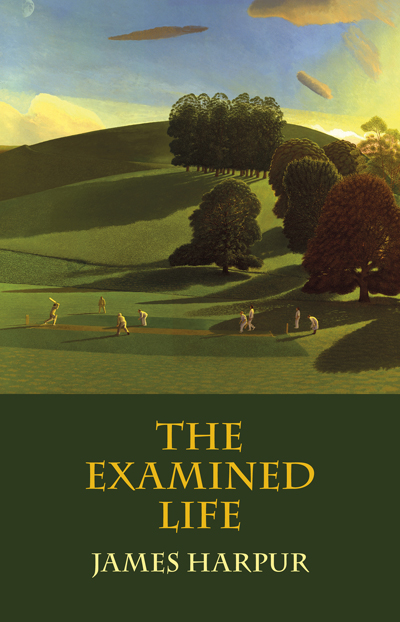
The Examined Life
This collection is quite brilliant oscillating as it does between the comic and the tragic
A serious success a subtle account of adolescence, friendship, confinement, the fashions of the 1970s, a meditation on the phrase in loco parentis, and a brilliant exercise of memory.
Haunted and haunting a terrific examination of homesickness the Odyssey a vibrant framework for Harpur s five years away at school .
It haunts me still, this whole collection, months, nearly a year later the details carry something of the soul of England.
Completely wonderful to read. I was amazed, amused, horrified, and so very moved.
It's an unflinching account of an unholy initiatory ordeal moving, funny, tender, lyrical and exact Terrific stuff.
A quite marvellous work an Odyssey, a Ulysses shaken up in the snow-dome of A Portrait of the Artist as a Young Man.
|
||||||||
|
|
|||||||||
|
Order the book |
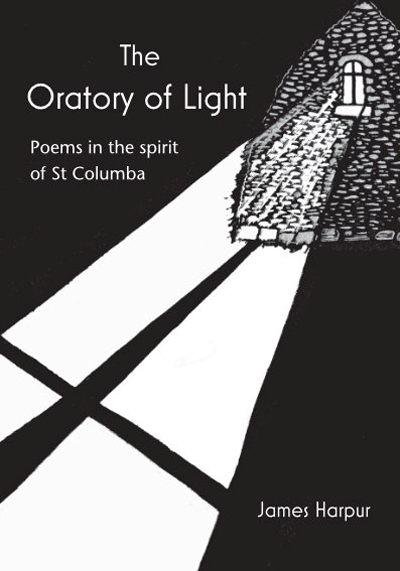
The Oratory of Light: Poems Inspired by St Columba
St Columba, or Columcille, and the island of Iona are the
inspiration behind this book of delicate lyric poems. Delving into
the stories of the saint including visions of angels, struggles
with Picts, and various miracles Harpur mingles his own poetic
imagination with the spirit of Columba and the landscape of Iona:
the result is poetry full of spiritual freedom and redolent of an
age of wonder in which the natural world and the elements were
perceived to be in harmony with the divine.
|
||||||||
|
|
|||||||||
|
Order the book |
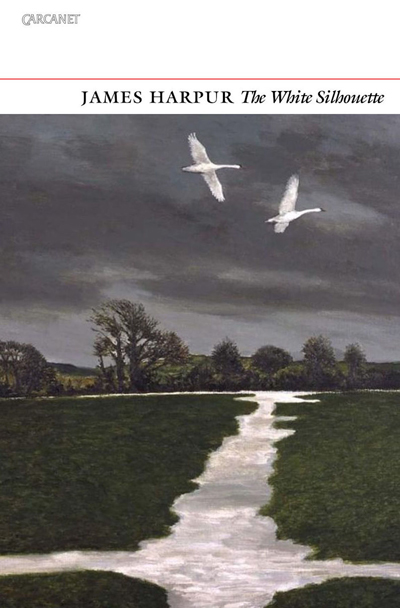
The White Silhouette
'I have rarely encountered a contemporary voice that brings out as strongly and convincingly as does James Harpur's in The White Silhouette the way in which spiritual wrestlings and traditions can live again in poetry.'
|
||||||||
|
|
|||||||||
|
Order the book |
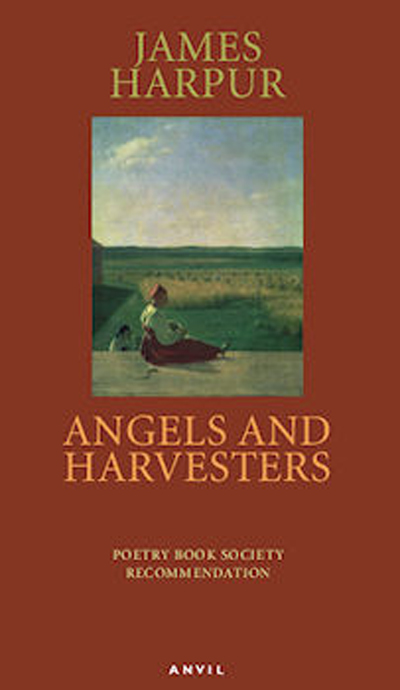
Angels and Harvesters
'A simply perfect book of poems... a poetry of compressed knowledge and sheer delight in telling tales... an exemplary text that should be read by anyone planning to bring out a book of poems.'
Thomas McCarthy, The Irish Examiner
|
||||||||
|
|
|||||||||
|
Order the book |
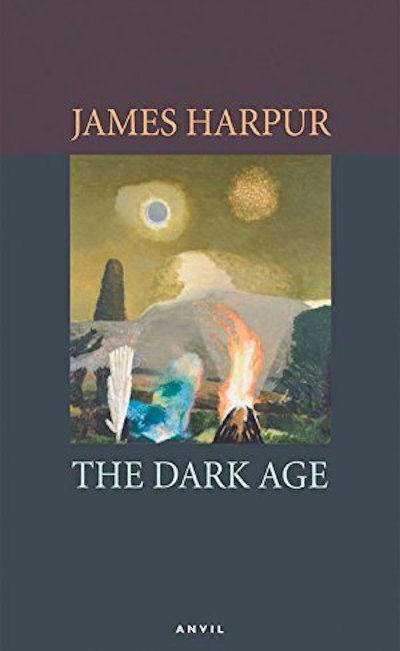
The Dark Age
'His poetry, always strongly imbued with a sense of the sacred, makes great play of light’s spiritual resonance... his brilliant imagery and luxuriant natural descriptions offer plenty to enjoy.'
|
||||||||
|
|
|||||||||
|
Order the book |
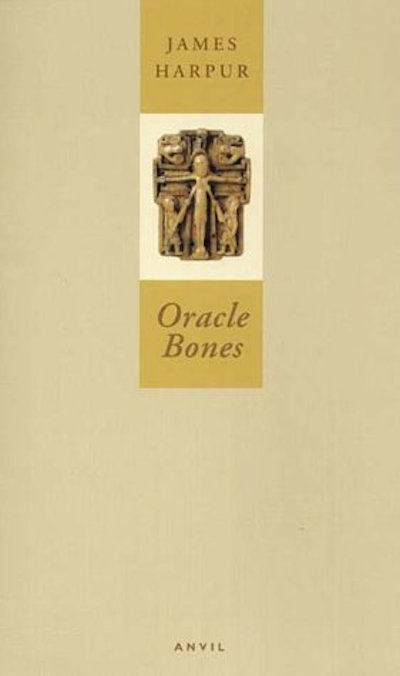
Oracle Bones
'James Harpur is... not in the least like anyone else ... His is an amazingly consistent voice, compelling in intensity... his is a world of insight and intuitions... If you’re brave enough, read him. He will take you into a world you will find difficult to forget.'
|
||||||||
|
|
|||||||||
|
Order the book from Amazon Or from James Directly |
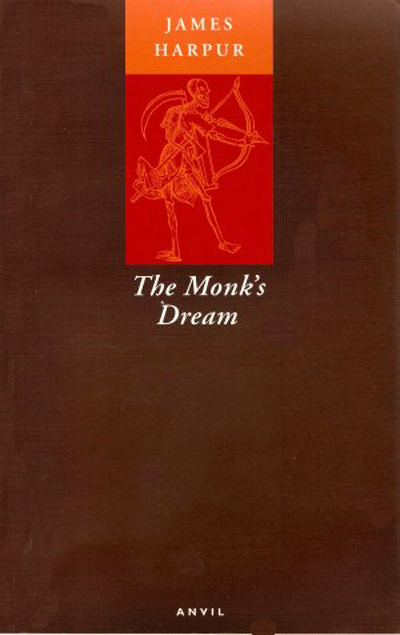
The Monk's Dream
'James Harpur's second book is disciplined, intelligent... His sources are the Bible, the Aeneid, Bede and Irish laments. But Harpur doesn't flirt with erudition. The Monk's Dream is an intricate exploration of death - not death alone, but the mystery that surrounds the experience... The title poem... suggests a belief in unseen forces, be they supernatural or imaginative; because of these, an ordinary life is significant beyond death. This idea also informs several of the book's excellent translations and adaptations. In all, The Monk's Dream is a finely weighted and balanced work of elegy.'
|
||||||||
|
|
|||||||||
|
Order the book |
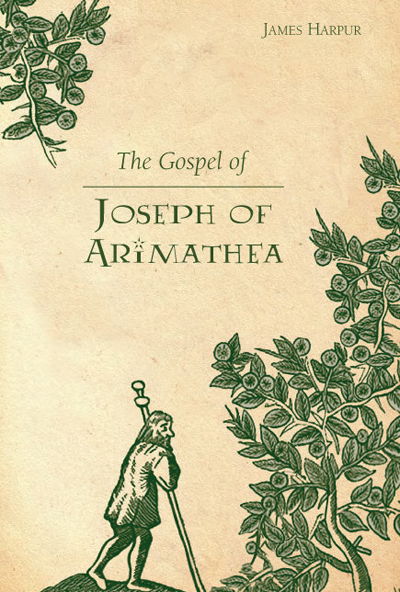
The Gospel of Joseph of Arimathea
'James Harpur uses the legend of Joseph of Arimathea's voyage to Britain's shores with the young Jesus as the prompt for Joseph to search out those who were closest to Jesus in his final years. As he continues to travel around on business, Joseph describes each meeting in prose, and then the person he is visiting tells of his/her time with Jesus in hauntingly beautiful poetry. The words play on your imagination till you can see the scene that they are describing. I found I had to read it to myself as if I was reading aloud, and then go back to the beginning and read it through again and again.'
|
||||||||
|
|
|||||||||
|
Order the book |
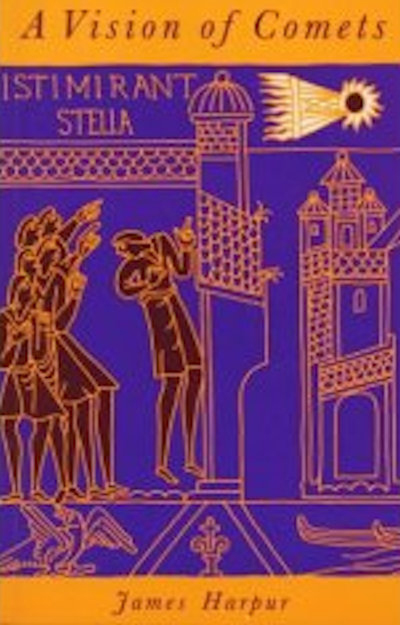
A Vision of Comets
'Mandalas, heavenly bodies, Greek mythology, temples and cathedrals give James Harpur's first collection a sense of the sacred running in parallel to the quotidian, and while the poems often reach into the exotic or esoteric, they are nevertheless accurately and cleanly made observances of a world the senses have access to.'
'Harpur is just how I like poets - skilled, erudite, in love with language, and with proper humility.'
'Harpur's tunes are chiefly lyrical ... the 'welter of accumulated memories' is skilfully caught.'
'It is in his poems on religious themes that the poet comes into his own, skilfully using a fluid free verse in the monologues 'Samson to his Maker' and 'Messiah' and creating a frieze of great charm in 'The Magi'.'
'Harpur's sensibility is attuned to love, time, myth, the numinous - the makings of poetry... my opinion warmed as I read... Harpur has an imaginative wonder.'
|
||||||||
|
|
|||||||||
|
Order From Amazon Or from James Directly |
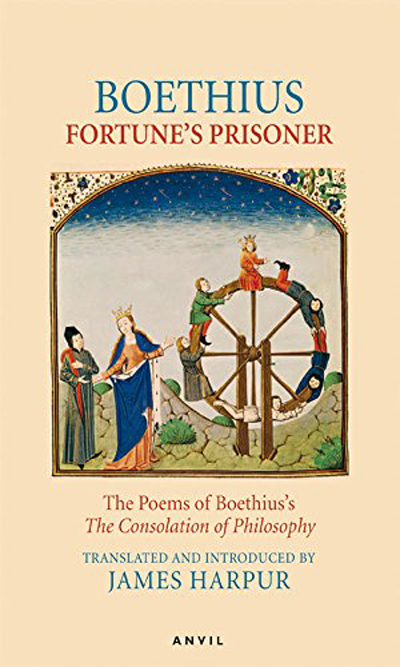
Fortune's Prisoner: The Poems of Boethius's Consolation of Philosophy
Imprisoned by Theodoric, the Ostrogothic king of Italy, and facing the possibility of execution, the Roman statesman and philosopher Boethius (c. 480-524) wrote his famous Consolation of Philosophy, a work that combines prose with verse.
'With a poet's flair, James Harpur has rendered the Consolation's poems in a fresh, modern translation as a sequence in their own right. From the prisoner's initial despairing dirge, to Philosophy's final plea for people to recognize their divine nature, the poems explore classic themes such as the character of Fortune, free will, the problem of evil and the nature of justice.
For poetry lovers, Classicists and Boethius enthusiasts alike, this is a book that takes the reader on journey into the mind and soul of one of the most profound and influential of Roman writers.
'Boethius's deeply intricate thought is here distilled into beautiful aperçus... as a dream dreamt in a cell of nightmare, it should inspire everyone.'
'Harpur has done a fine job in presenting his subject in a fresh and original way.'
'In Fortune's Prisoner (Anvil Press, £8.95), the poet James Harpur has done a deft bit of editorial work with part of Boethius' Consolations of Philosophy, which was written in about 524, after Boethius had been arrested for alleged treason. Harpur has extracted the poems from the philosophical text, translated them from Latin into English, and added telling epigraphs to many to give their meaning a bit of wider context. The whole exercise has an eighteenth-century feel about it these poems, generally speaking, are of the what-oft-was-thought-but-ne'er-so-well-expressed variety: lovely, rhyming versions of telling moral maxims, beautifully rendered.
|
||||||||
|
|
|||||||||
|
Home Biography Poetry Poems Memoir Non-Fiction Talks Novel Translation Video Contact |
|||||||||